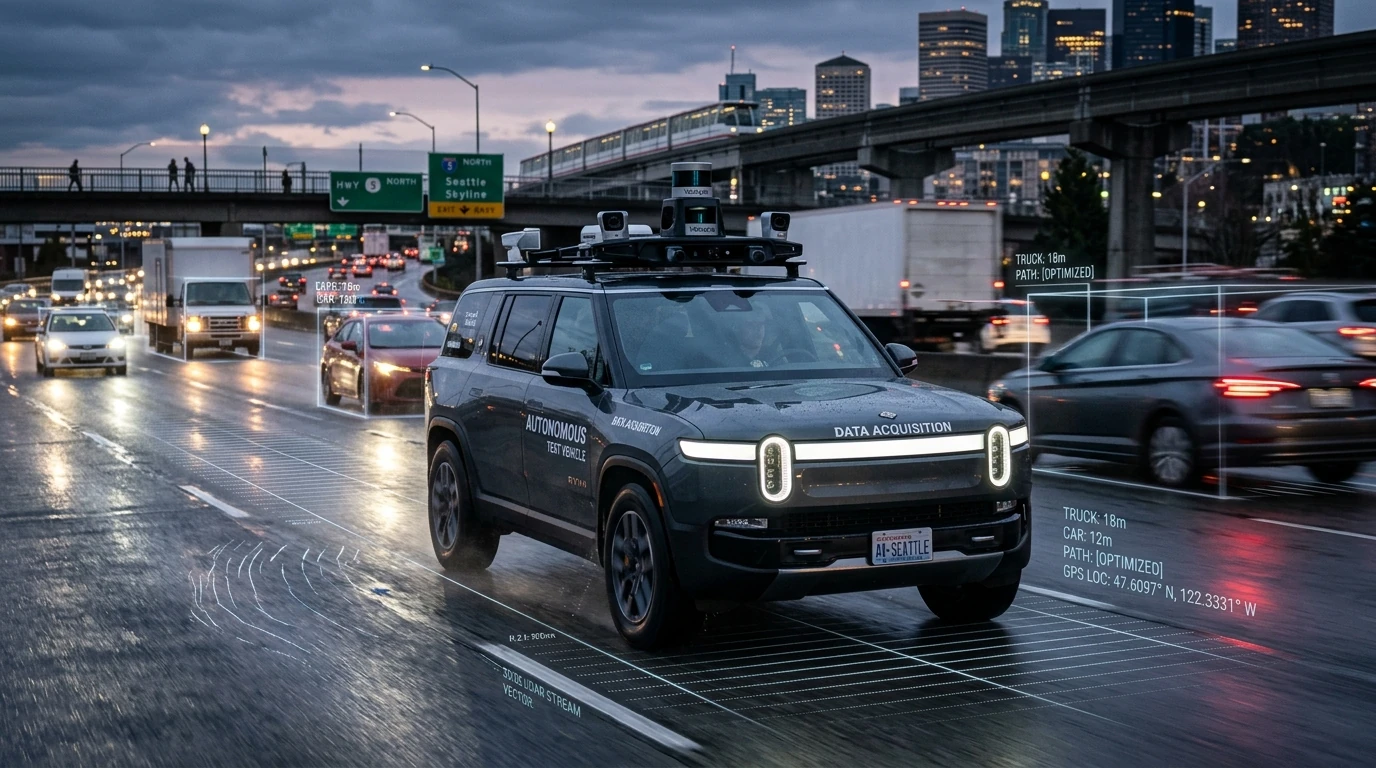
The Anatomy of Frontier Data: Why Vision-Language Models Require Spatial Grounding
Eliminating multi-modal hallucinations through verified coordinate anchors and cross-attention supervision.


Julian Thorne
Staff Research Scientist at Engai Lab
Specializing in multimodal tokenization, vision-language architectures, and synthetic coordinate alignment.
While modern Vision-Language Models demonstrate remarkable conversational fluency, they persistently stumble on fine-grained spatial relationships. Asking a model whether an object is to the left, behind, or occluding another frequently triggers hallucinated responses because web-crawled image-text pairs lack rigorous coordinate grounding.
1. The Gap Between Words and Coordinates

2. Precision Polygon Supervision at Scale

Summary & Engineering Outlook
On the RefCOCOg benchmark, spatial coordinate supervision eliminates 74% of geometric hallucinations while maintaining zero-shot conversational accuracy across diverse open-world domains.
Primary Research Sources & Empirical Citations
This technical post combines live telemetry from Engai production fleets with the following verified academic literature, public dataset benchmarks, and Google Scholar references:
Baseline corpus for evaluating linguistic expression to exact 2D pixel polygon coordinate grounding.
Empirical demonstration of coordinate-level loss functions in large vision-language backbones.