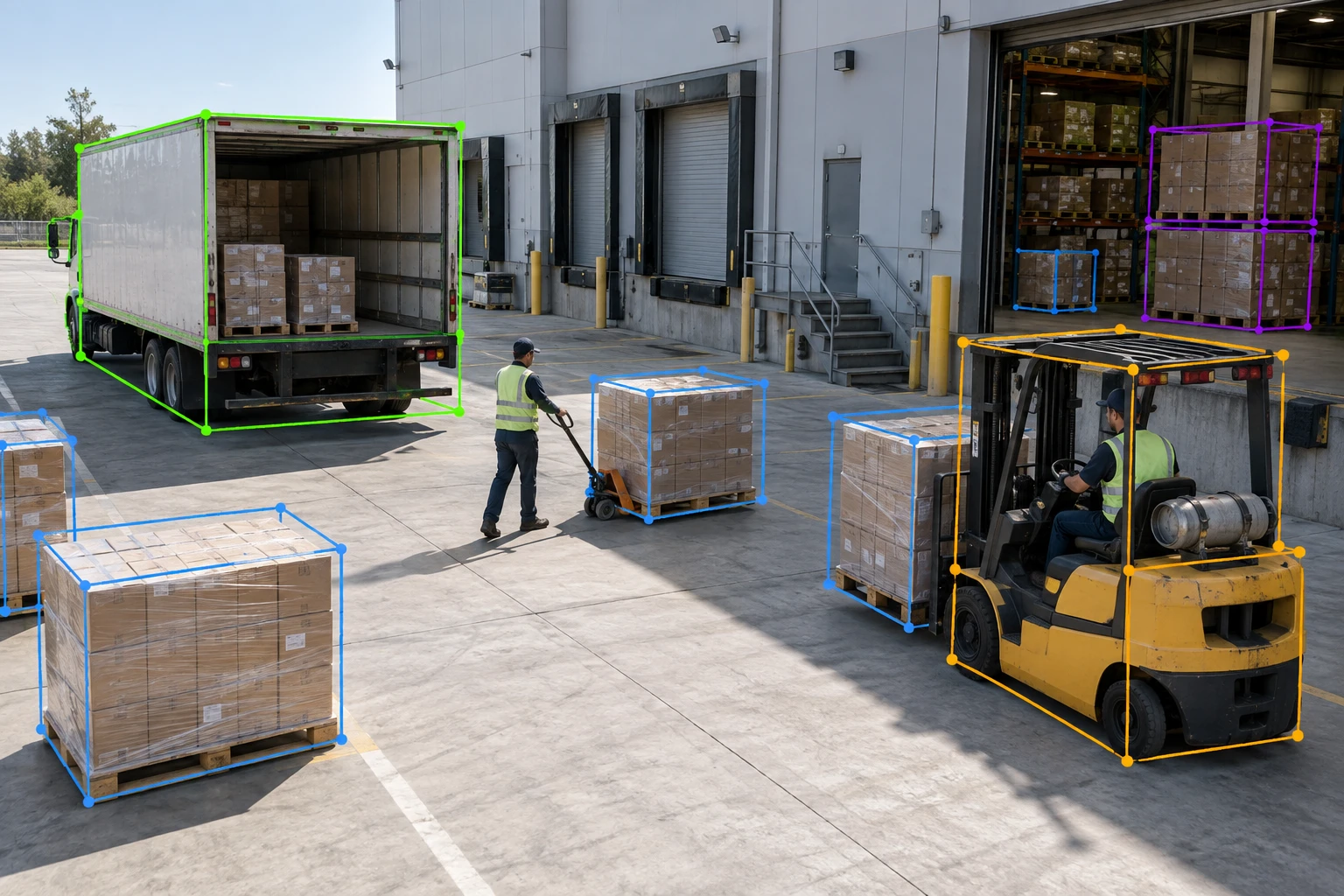
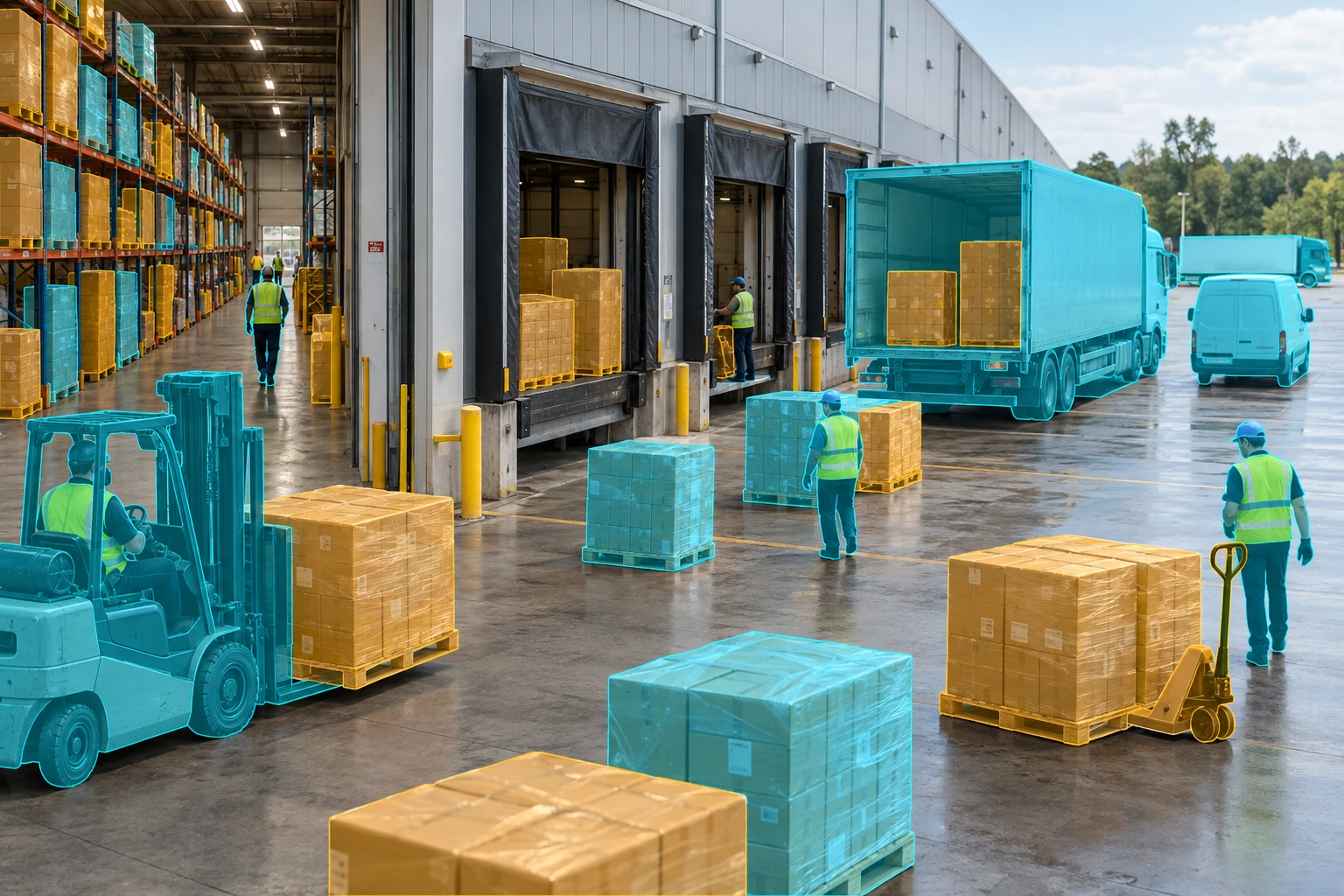
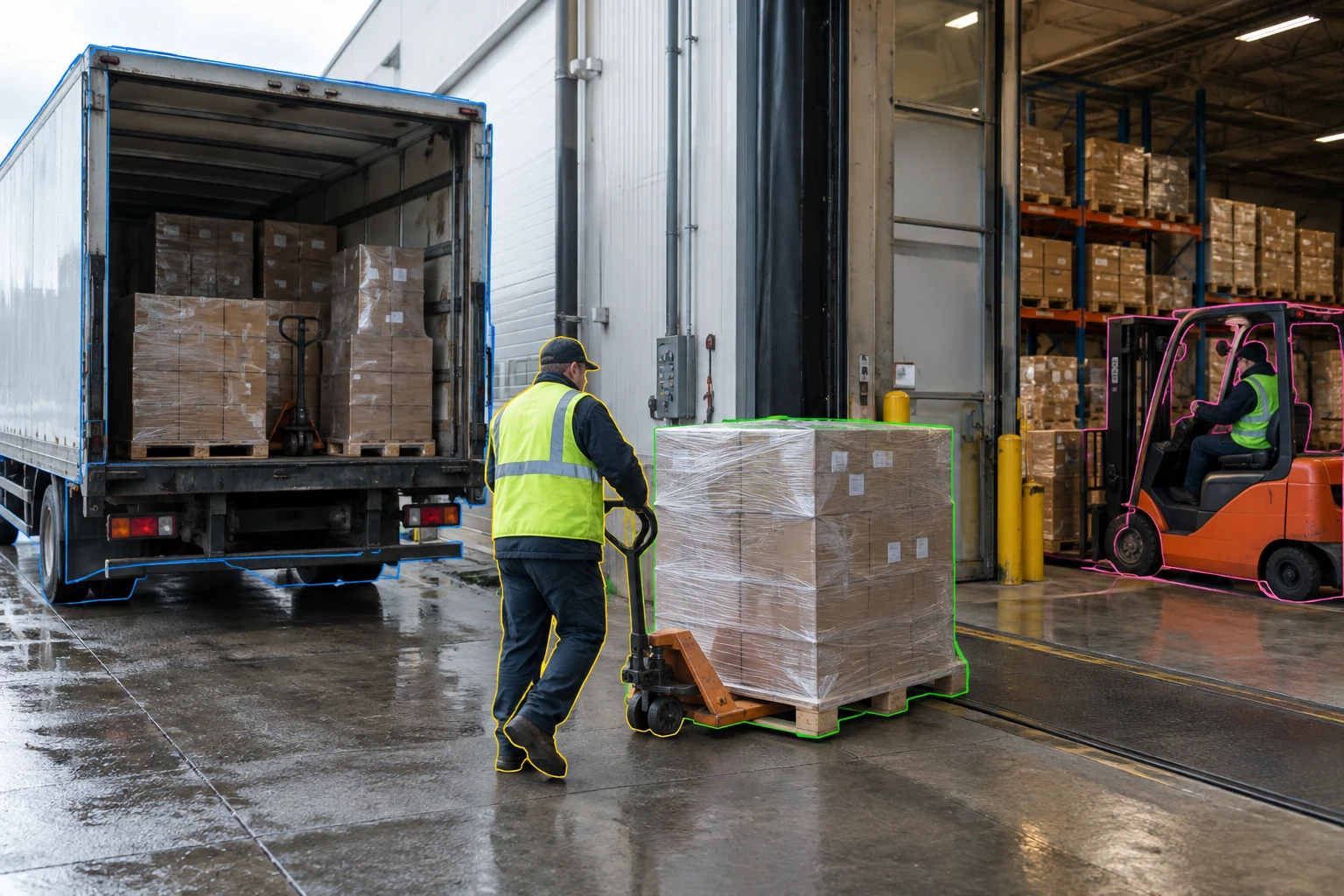
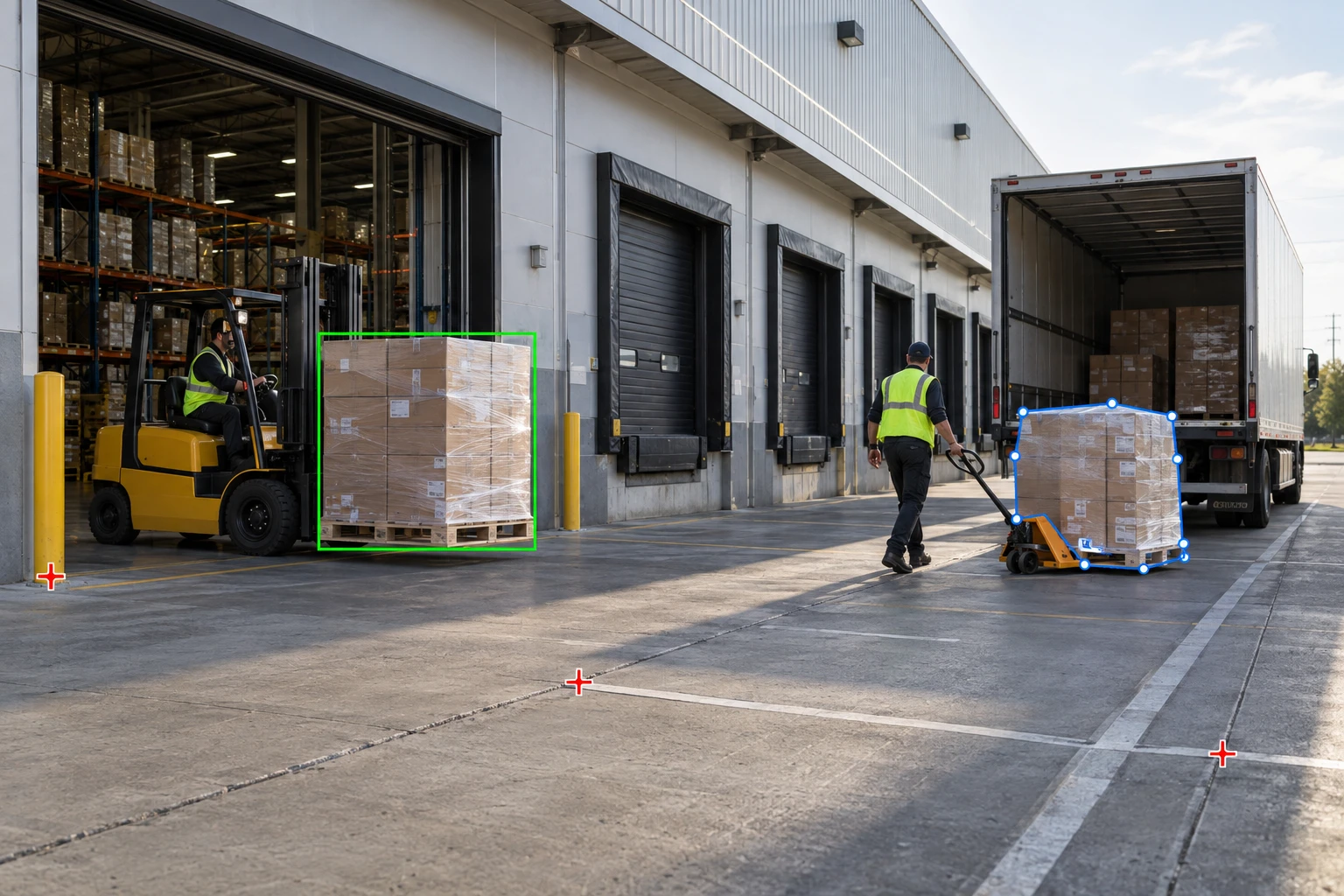
Parcel identification
Challenge
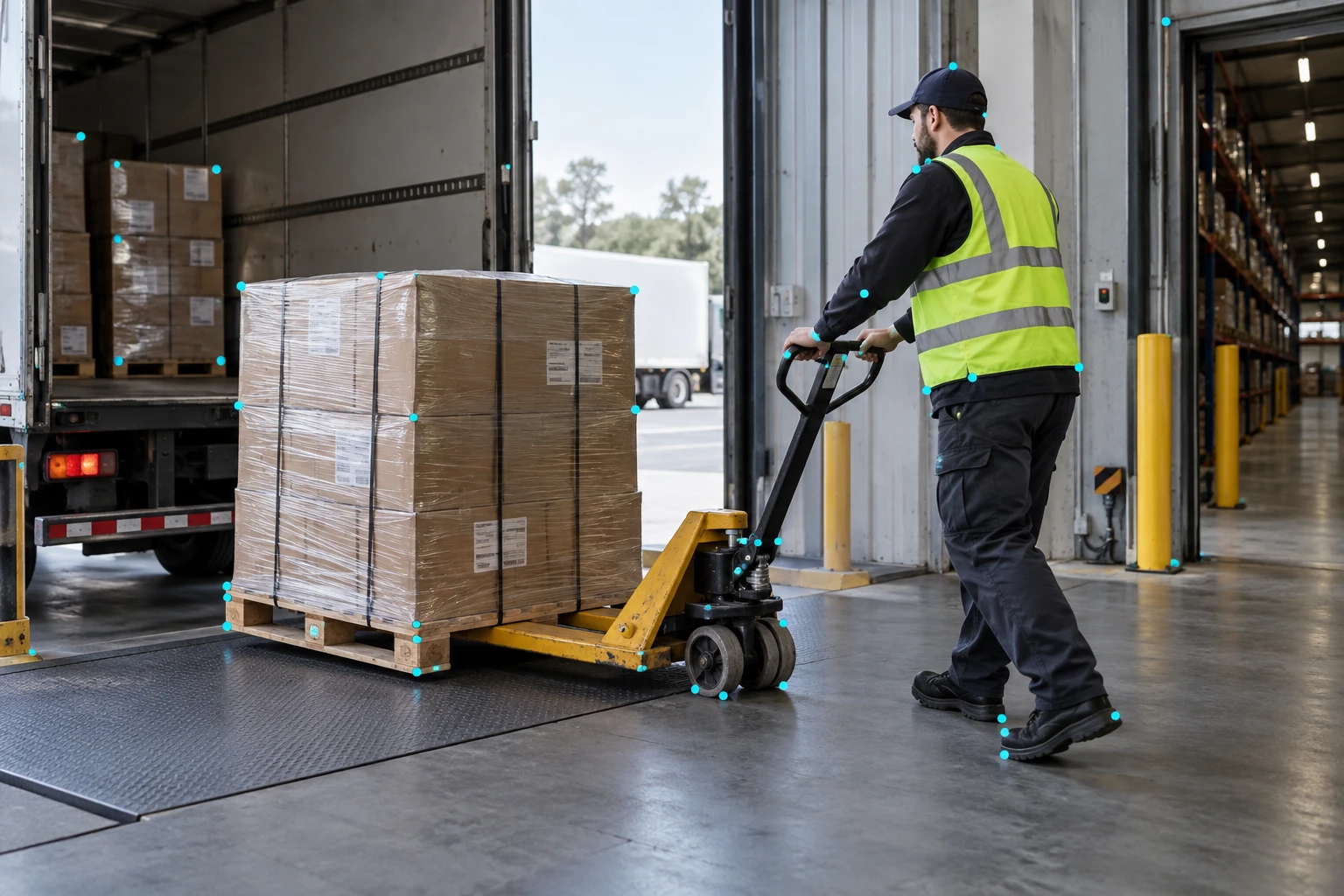
Packages overlap and labels may be damaged or partially hidden.
Our approach
Annotate parcel boundaries, readable label regions and visible condition attributes.
Loading docks, warehouse aisles and delivery routes need labels that capture real operational detail. Engai prepares logistics datasets around your objects, scenes and review requirements.
Trusted by leading brands







.webp)
Logistics Data Annotation services for a wide range of computer vision applications.
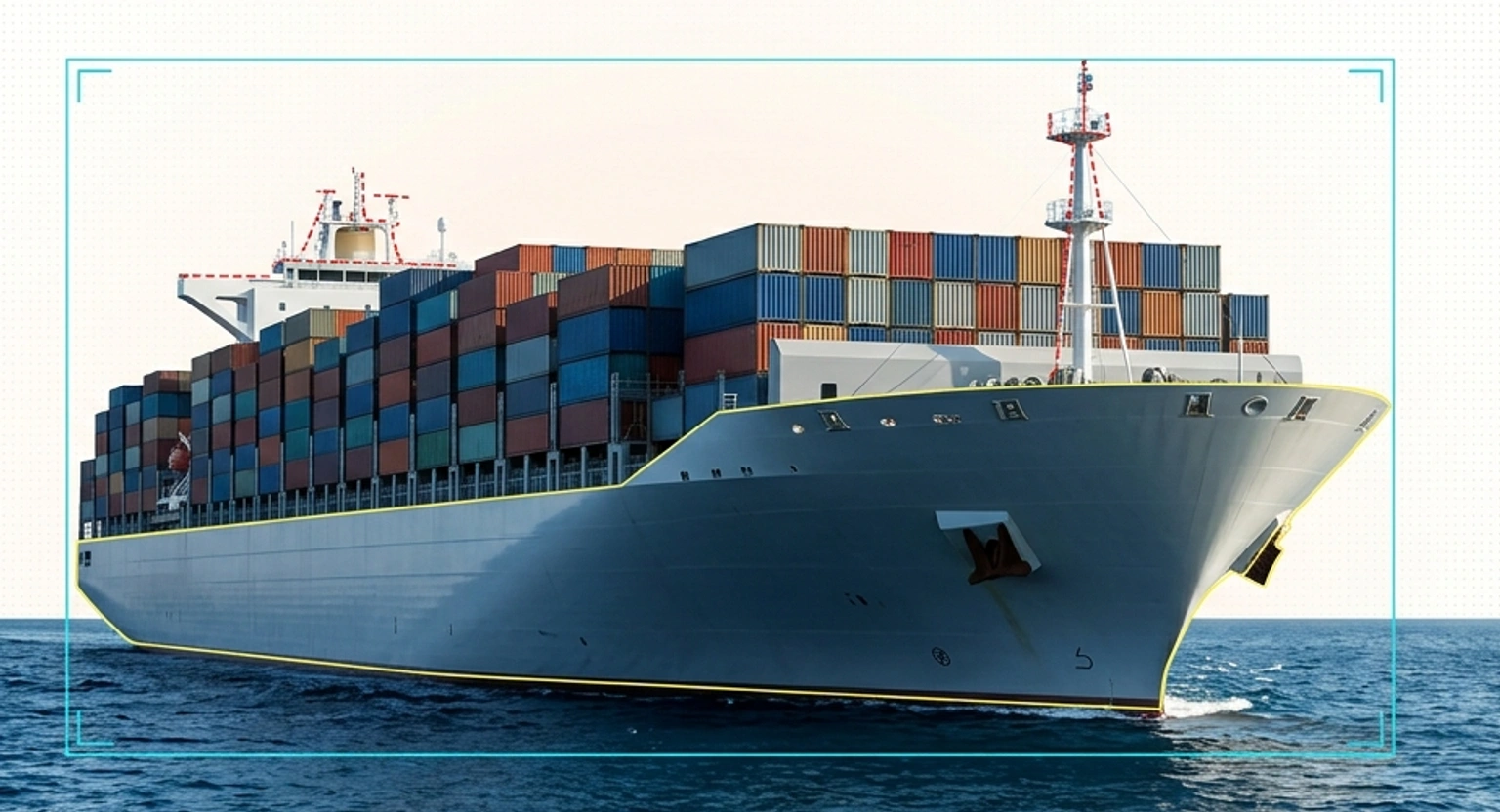
Logistics professionals already actively make use of AI in daily operations — it's become a staple in the industry for things like scheduling, automation, and warehousing.
However, clean datasets combined with modern computer vision can help train AI that goes well beyond what we're used to. Starting with annotated logistics data as a base, you can track and control every process in the industry, and with embedded AI in devices and robotics, systems can make real-time decisions and physically automate warehouse operations.
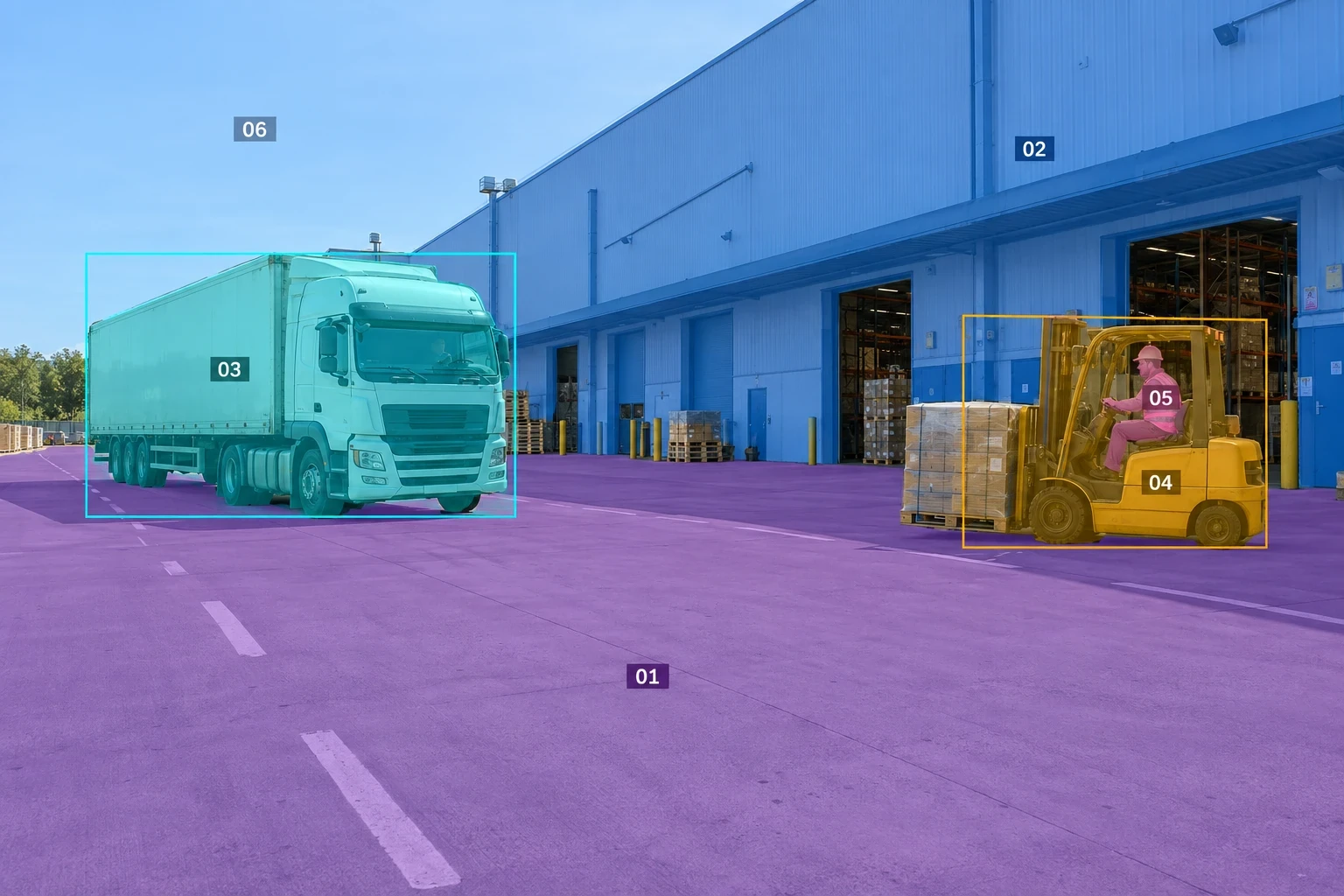
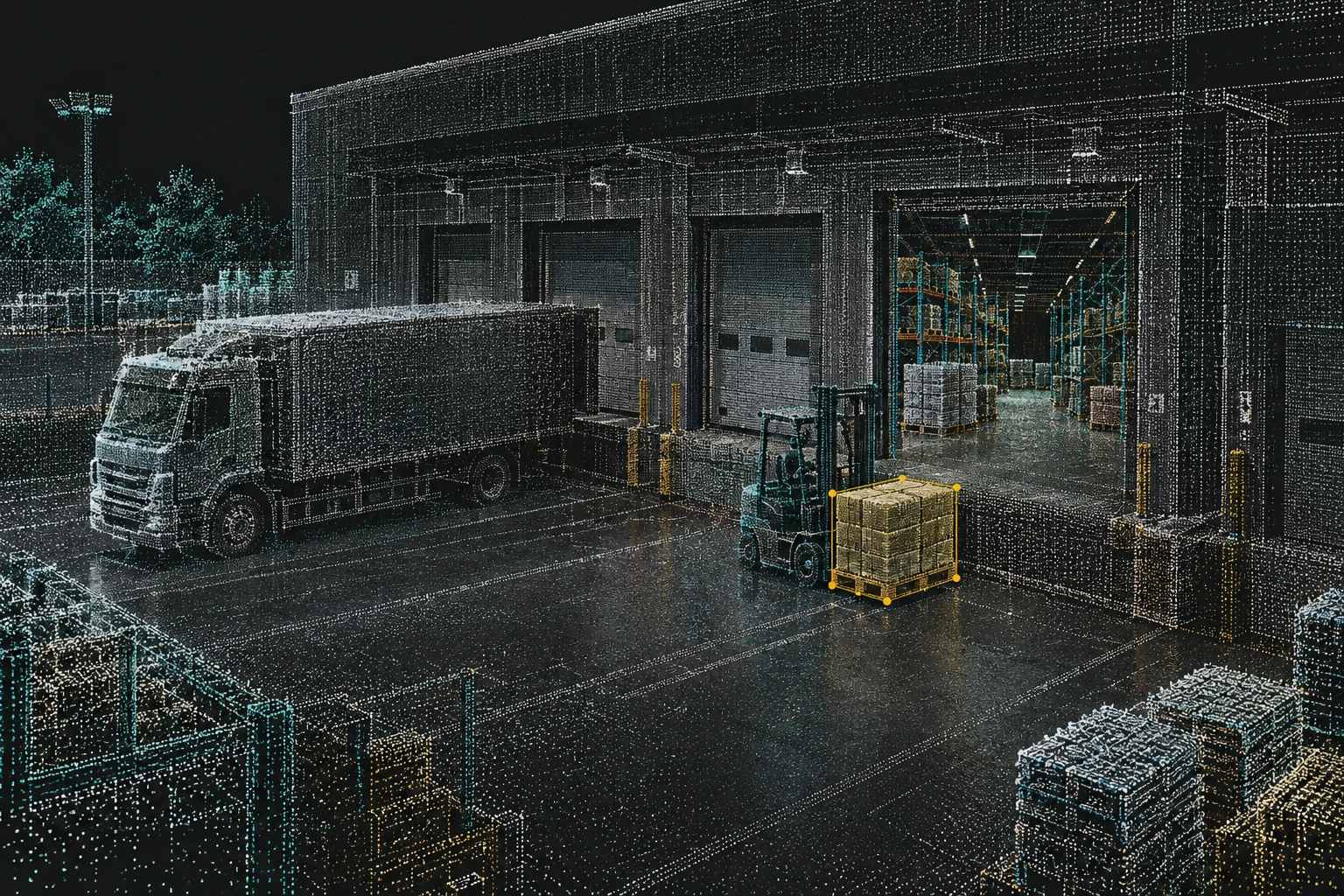
Engai creates custom logistics training datasets tailored for warehouse vision, container tracking, package condition inspection, and autonomous fleet routing. Explore these annotation techniques engineered to power your operations:
Carefully annotated data for logistics perception, automation and research.
Packages overlap and labels may be damaged or partially hidden.
Annotate parcel boundaries, readable label regions and visible condition attributes.
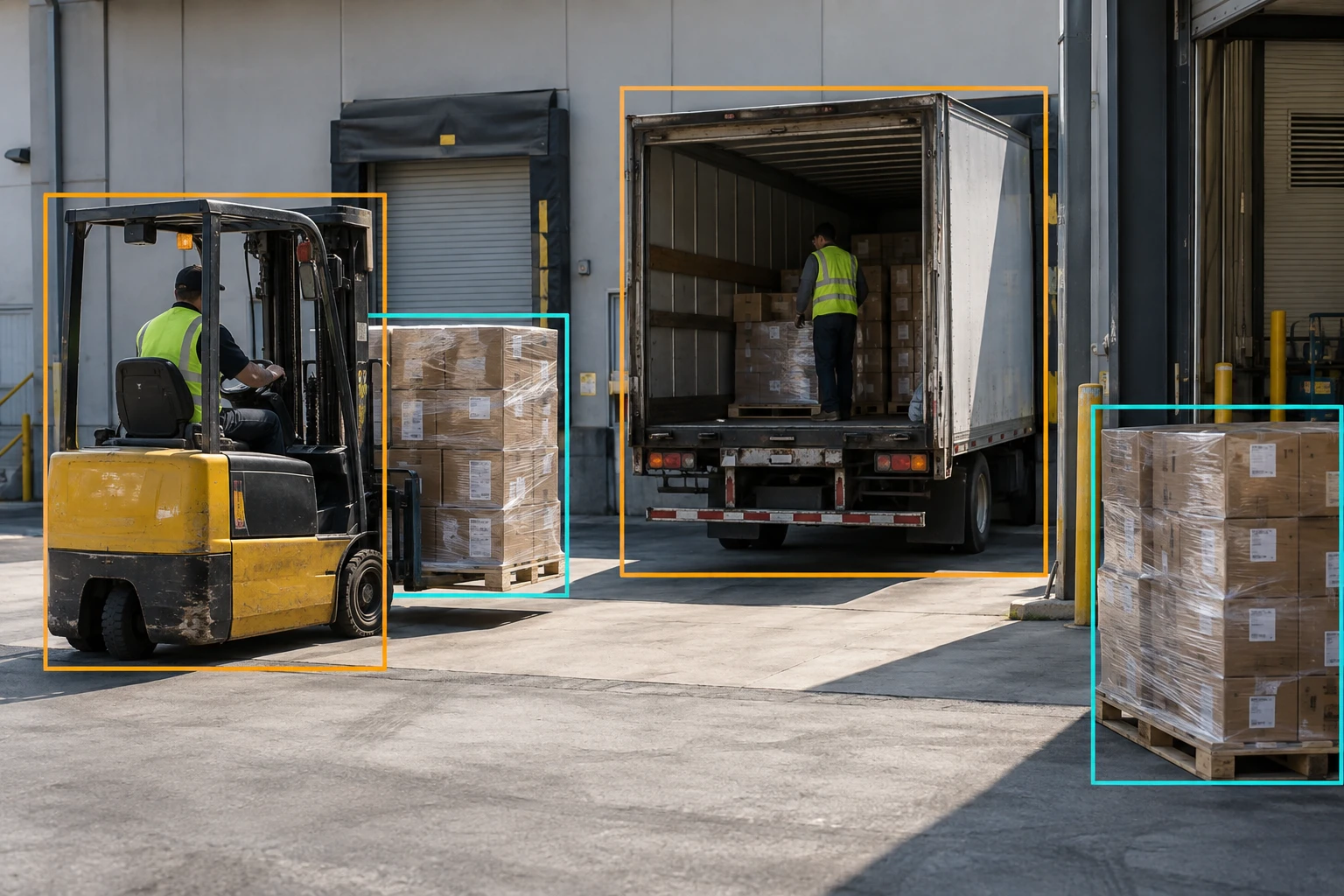
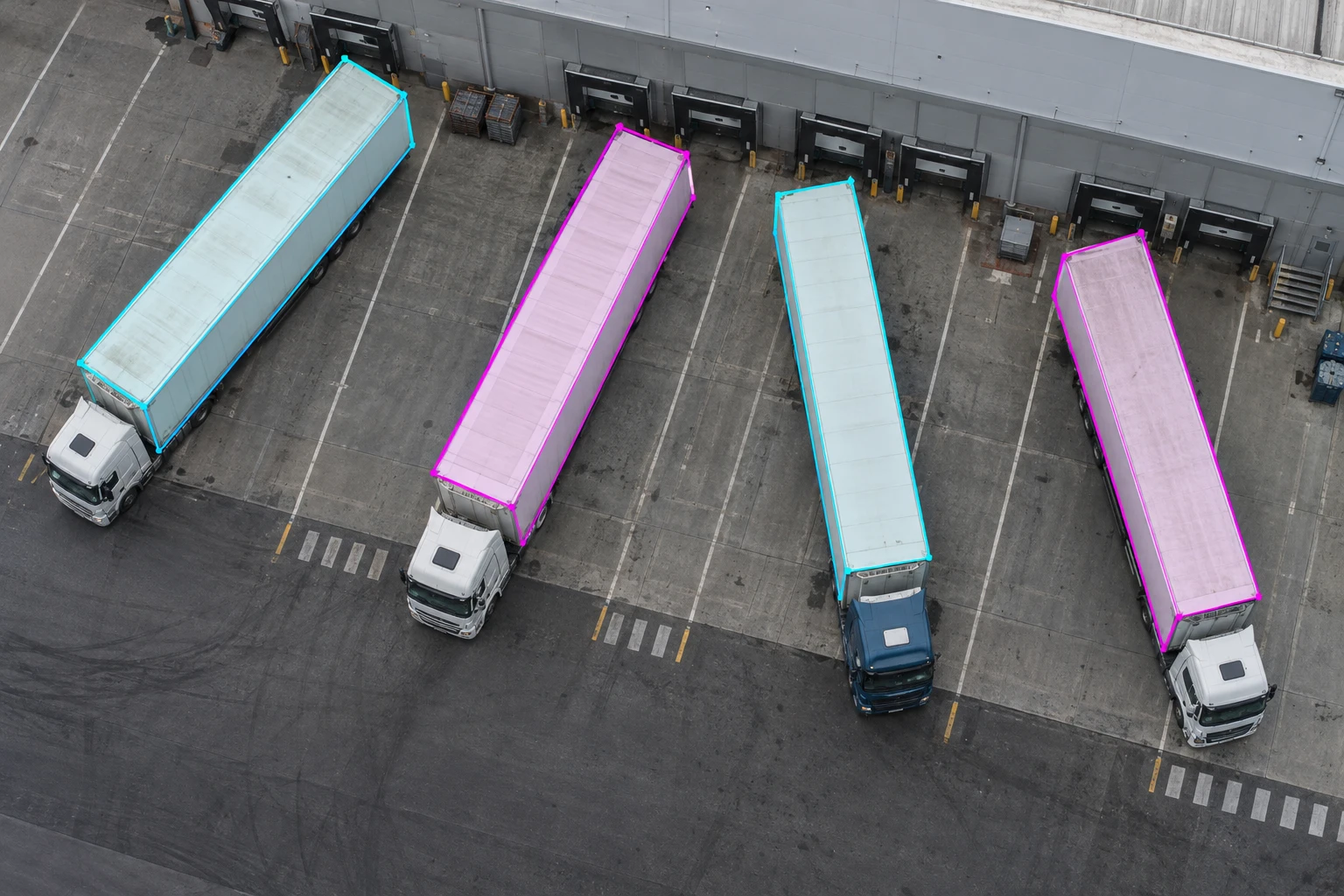
Define classes for parcels, pallets, vehicles and warehouse infrastructure, with visual examples and explicit boundary rules.
Review the effects of lighting, scale and occlusion in loading docks, warehouse aisles and delivery routes.
Connect logistics labels to source identifiers, scene metadata and the export schema your model uses.
Annotation capabilities
Loading docks, warehouse aisles and delivery routes need labels that capture real operational detail. Engai prepares logistics datasets around your objects, scenes and review requirements.
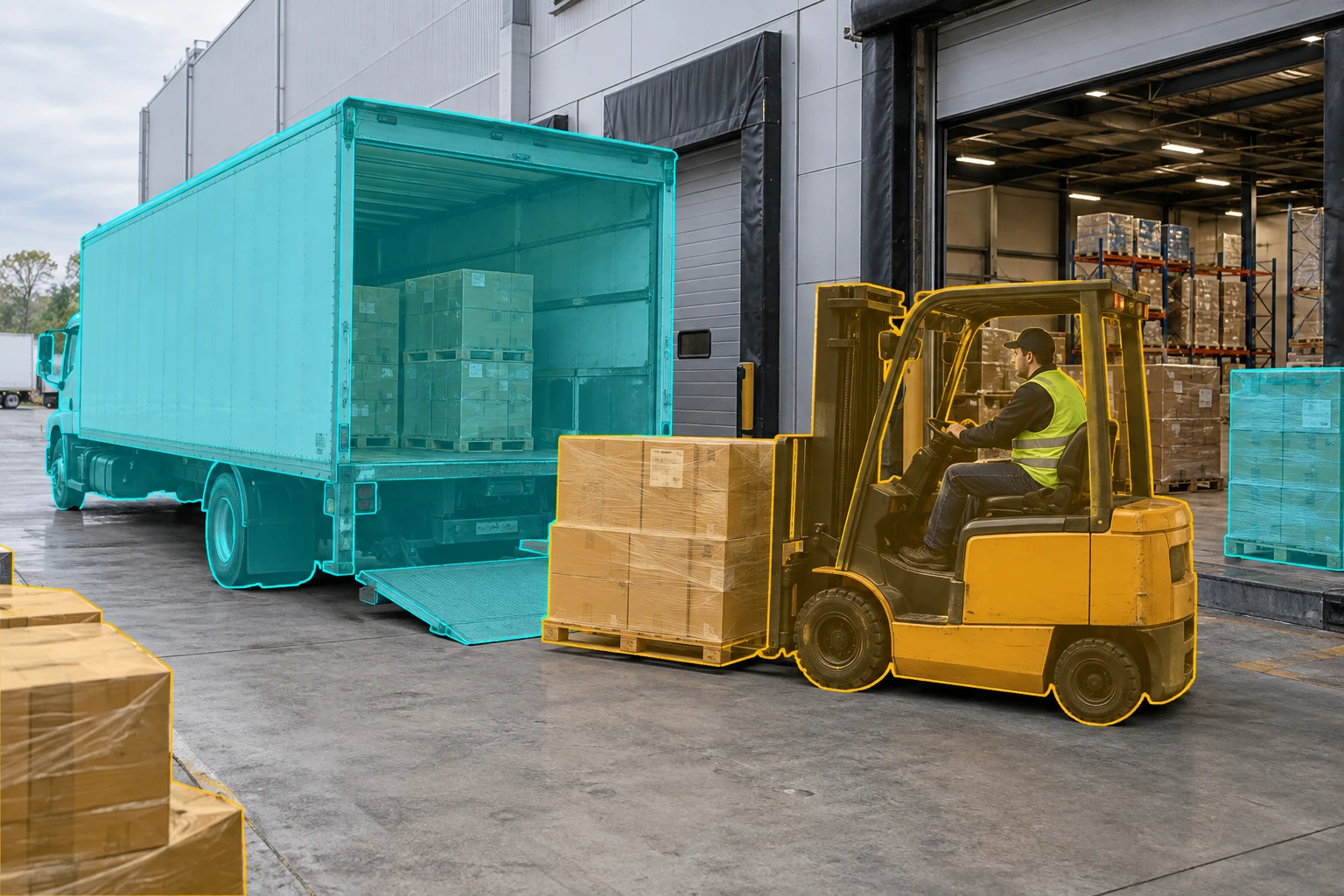
Review model proposals and correct missed objects or uncertain boundaries. Applied to parcels, pallets, vehicles and warehouse infrastructure.
Recognize parcels, readable barcodes and loading areas in warehouse imagery. Build training data for goods receiving, storage and dispatch.
Link item identities across frames and annotate unit counts to support stock reconciliation and movement visibility.
Label crushed corners, torn wrapping, open cartons and visible moisture damage so inspection models can distinguish package conditions.
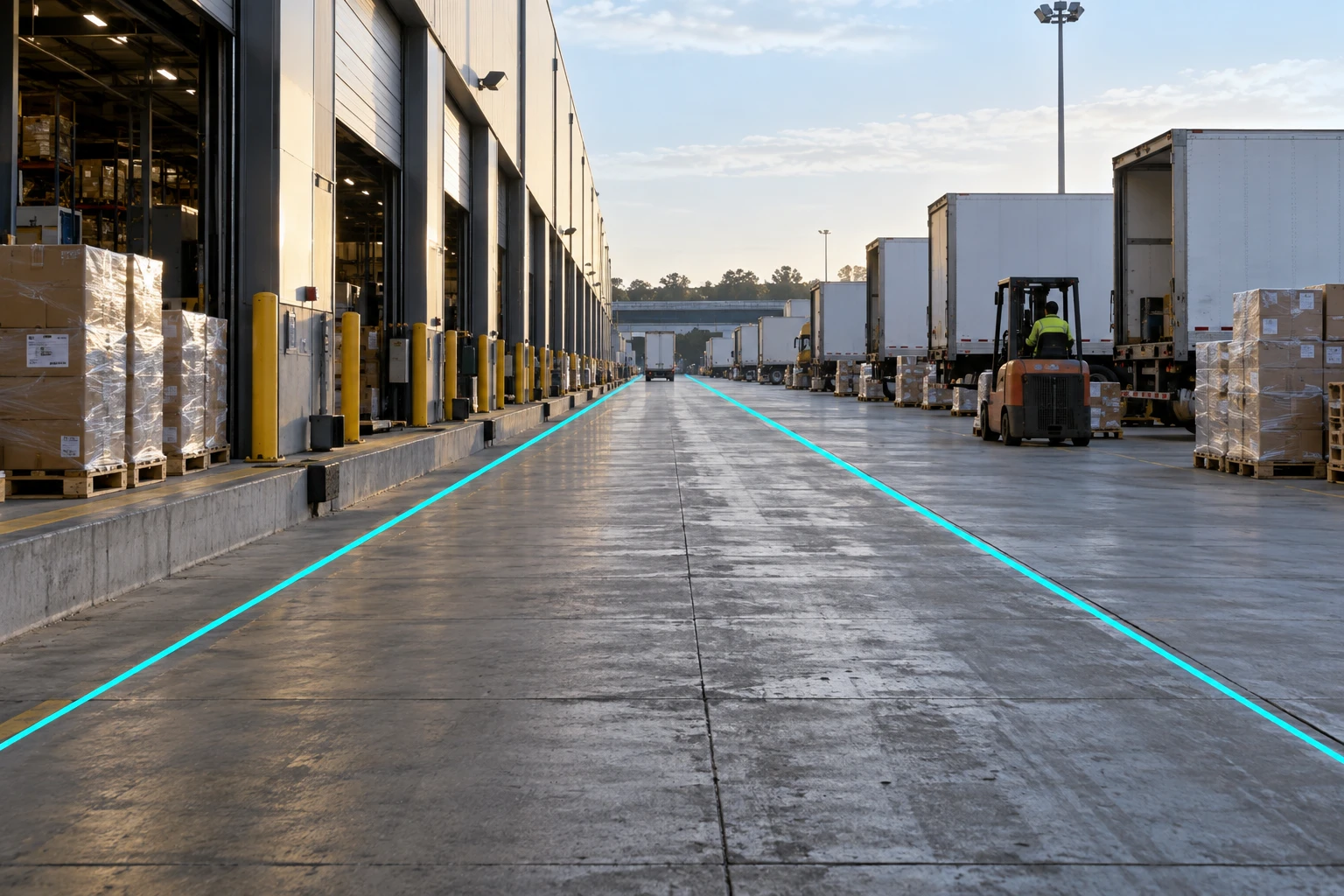
Combine road boundaries, loading-zone labels and traffic observations with delivery metadata to prepare route-planning datasets.
Prepare logistics instructions, exception cases and reviewed responses for assistants that support warehouse and delivery workflows.

The sample batch helped us agree on how to handle overlapping leaves and partially visible crops.
Having those edge cases discussed early would give our team a clearer baseline before scaling annotation.
Our labeling requirements evolved as we reviewed the imagery. The feedback process felt straightforward.
A shared set of examples and regular checkpoints would help keep the dataset consistent across batches.
Field images are rarely perfect. We appreciated the attention to shadows, occlusion and changes in lighting.
These are the details we would want a labeling partner to consider when preparing data for crop-monitoring models.
Annotation applications across logistics workflows.
Packages overlap and labels may be damaged or partially hidden.
Annotate parcel boundaries, readable label regions and visible condition attributes.
Reviewed bounding boxes data with a consistent label schema and documented edge cases.
A project target for improving throughput with task-specific training data.
Where calibrated source imagery supports fine spatial measurements.
A project target for reducing review effort through assisted labeling.
Build your workflow around the infrastructure your team uses.
Secure local processing for sensitive datasets.
Highly scalable infrastructure powered by AWS/GCP.
Real-time inference optimized for on-device hardware.
 ONNX
ONNX TensorRT
 Core ML
 OpenVINO
 LiteRT
 TorchScript
 PaddlePaddle
 IMX500
 Qualcomm
 Huawei
Available formats depend on your model, runtime and target hardware.
fill up this form to send your pilot request
Discover how Engai's Data Pipeline and AI Infrastructure platform can make your organization AI-ready:
Automatically discover and map all datasets with contextualized inventory
Effortlessly manage ML lifecycle and address governance gaps
Drastically reduce deployment time by mitigating edge-case risks
Immediately detect and respond to model drift to minimize threat impact
Proactively apply zero-trust protection mechanisms for proprietary data
Your requirements and proprietary sample assets are encrypted in transit and never used for public model training.